Geometric Stars
Eight-pointed stars and lattices standing for celestial order and cosmic harmony.
The four-thousand-year-old language of resist block-printing — written in indigo, madder and the patience of sixteen hands-on stages.
Ajrakh is one of humanity's oldest surviving textile arts — a resist-and-dye block print whose geometry has barely changed since the Indus Valley Civilization.
The Khatri community carried this craft into Kutch from Sindh roughly 400 years ago. After the 2001 earthquake displaced them, the printers founded an entirely new village — Ajrakhpur, near Bhuj — which is today the global heart of authentic Ajrakh. Every length of cloth still passes through up to sixteen meticulous stages of washing, resist-printing and dyeing, a single piece taking the better part of a month.
The name comes from “azrak” — Arabic for blue — a quiet tribute to the deep indigo that defines the craft.
Behind every Ajrakh print is a slow choreography of mud, oil, fermentation and sun. Here is the rhythm of it.
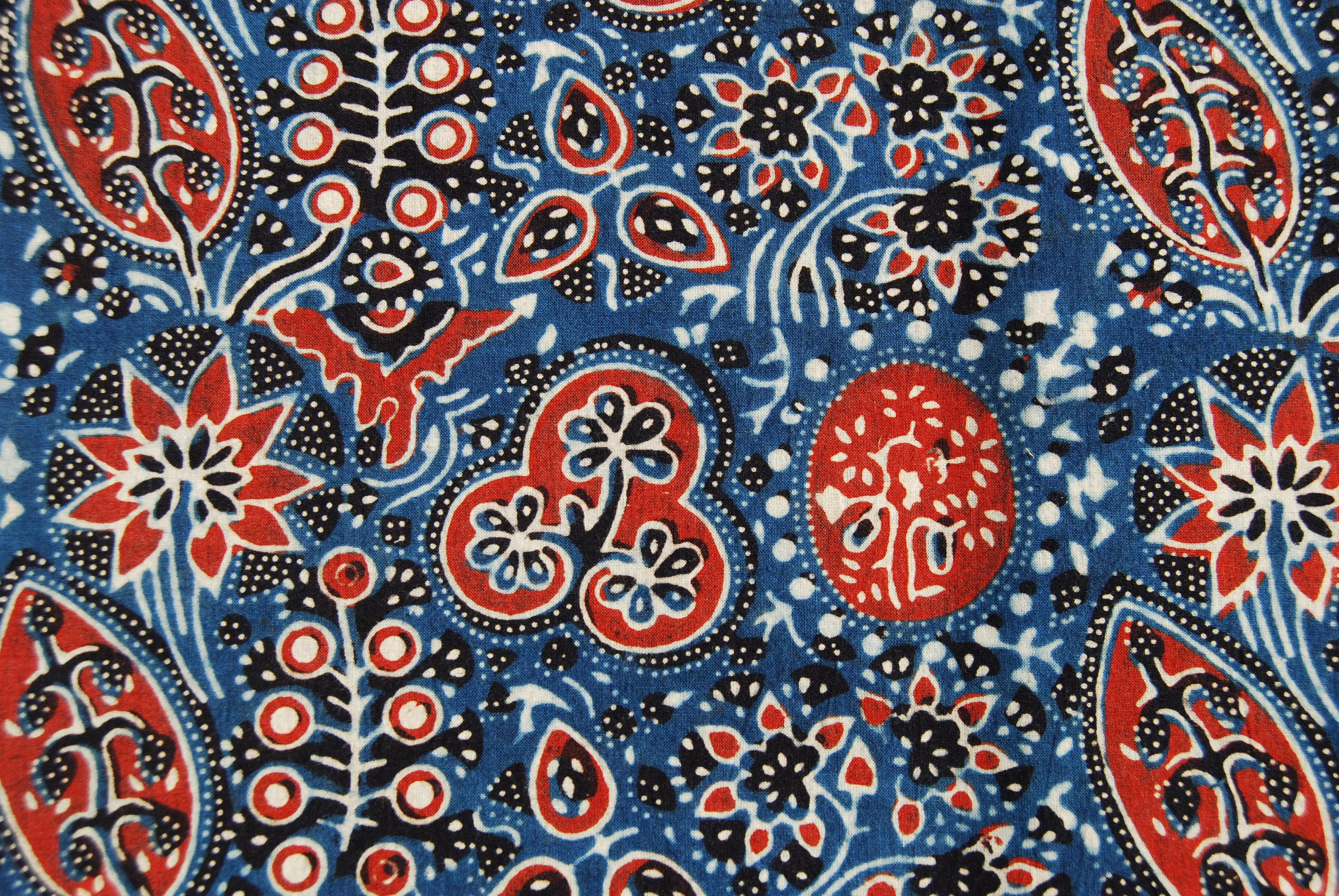
The fabric is washed repeatedly, then treated with castor oil, soda ash and camel dung. This softens the fibres and opens them up so the natural dyes can sink in evenly and hold for generations.
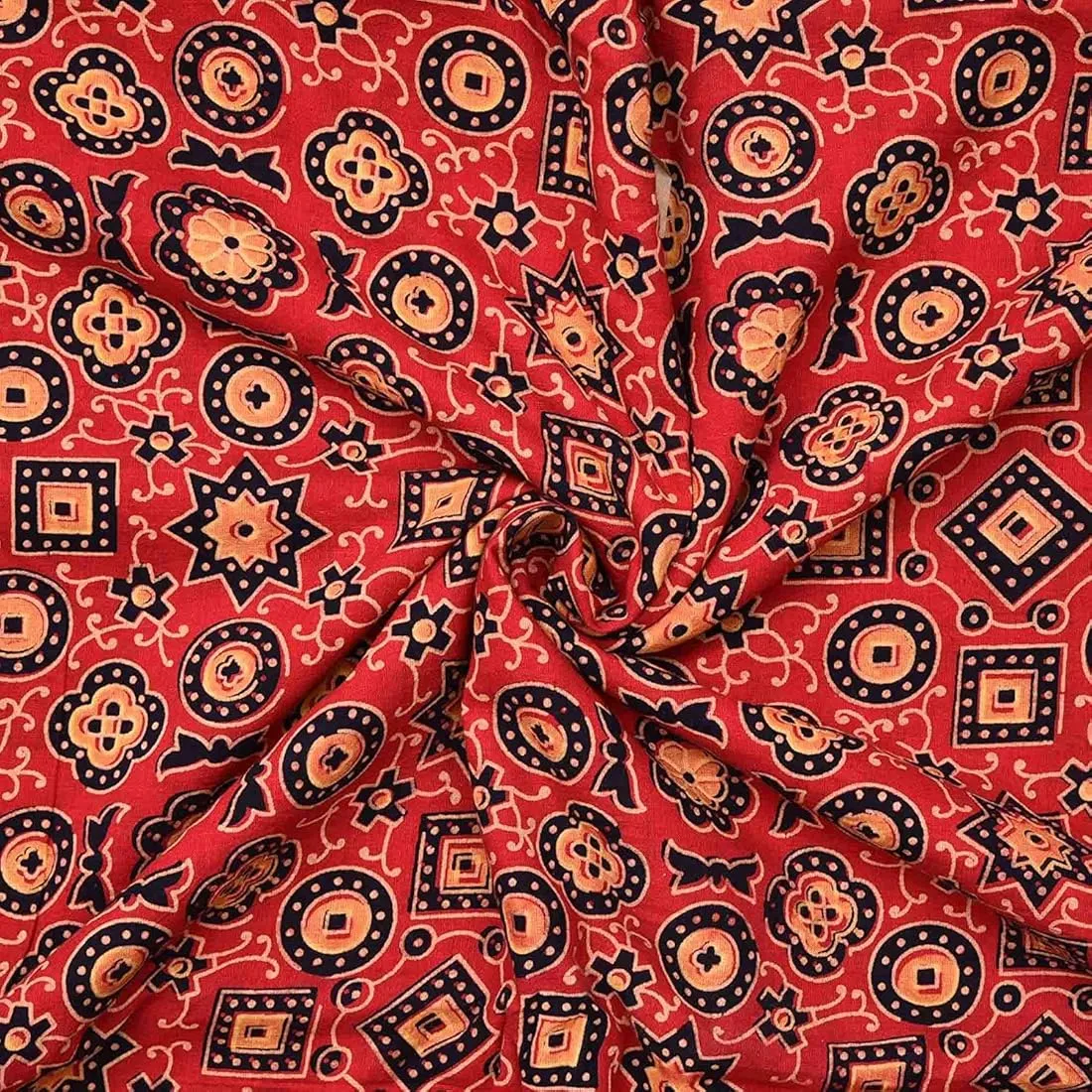
Hand-carved wooden blocks are dipped in a lime-and-gum resist paste and stamped across the cloth. Each colour and each layer of pattern demands its own block — and flawless, repeated alignment by eye.
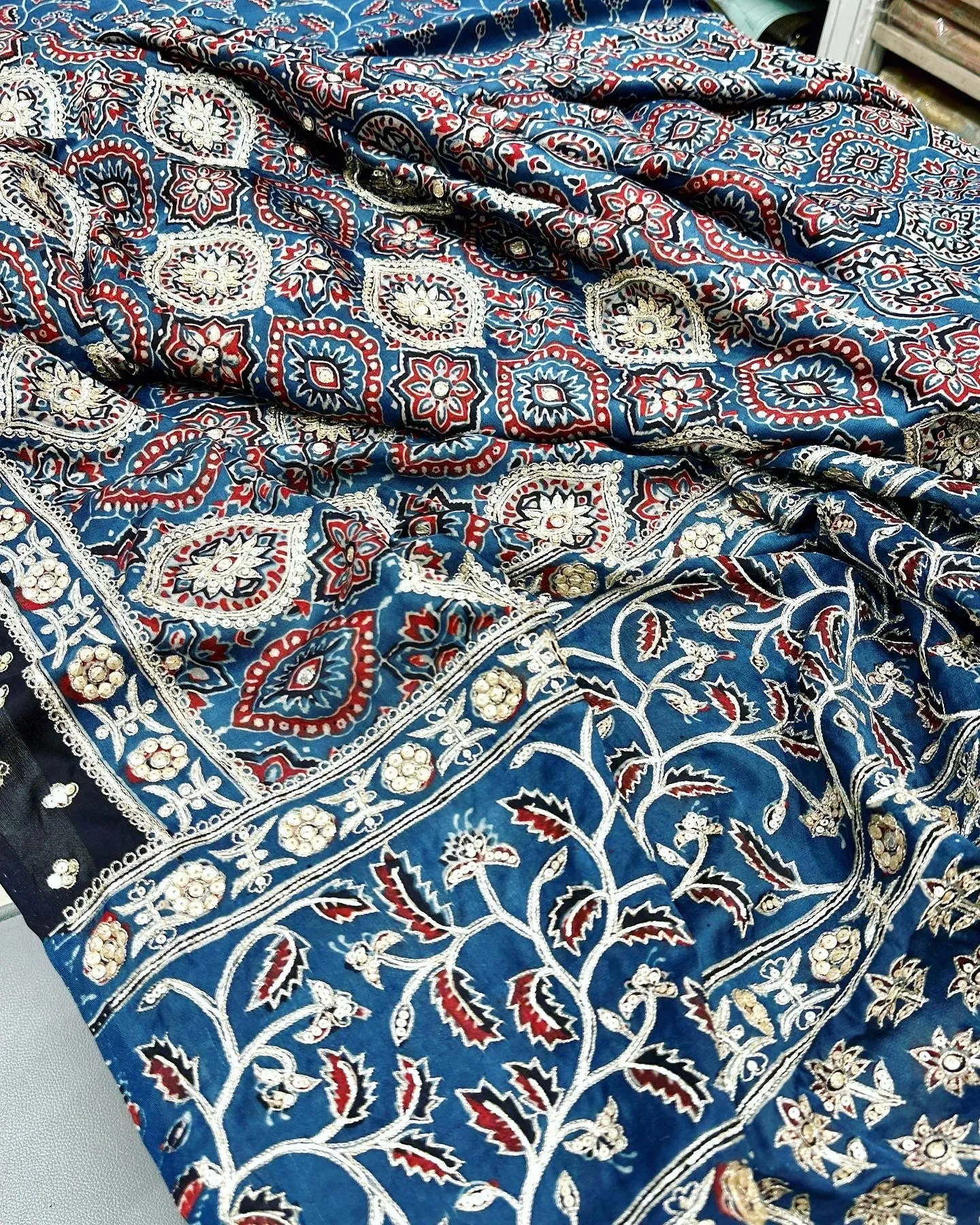
Indigo for blue, madder root for red, iron and jaggery for black. The fermenting indigo vat alone is tended for days; the resist-printed areas stay pale while everything around them drinks colour.
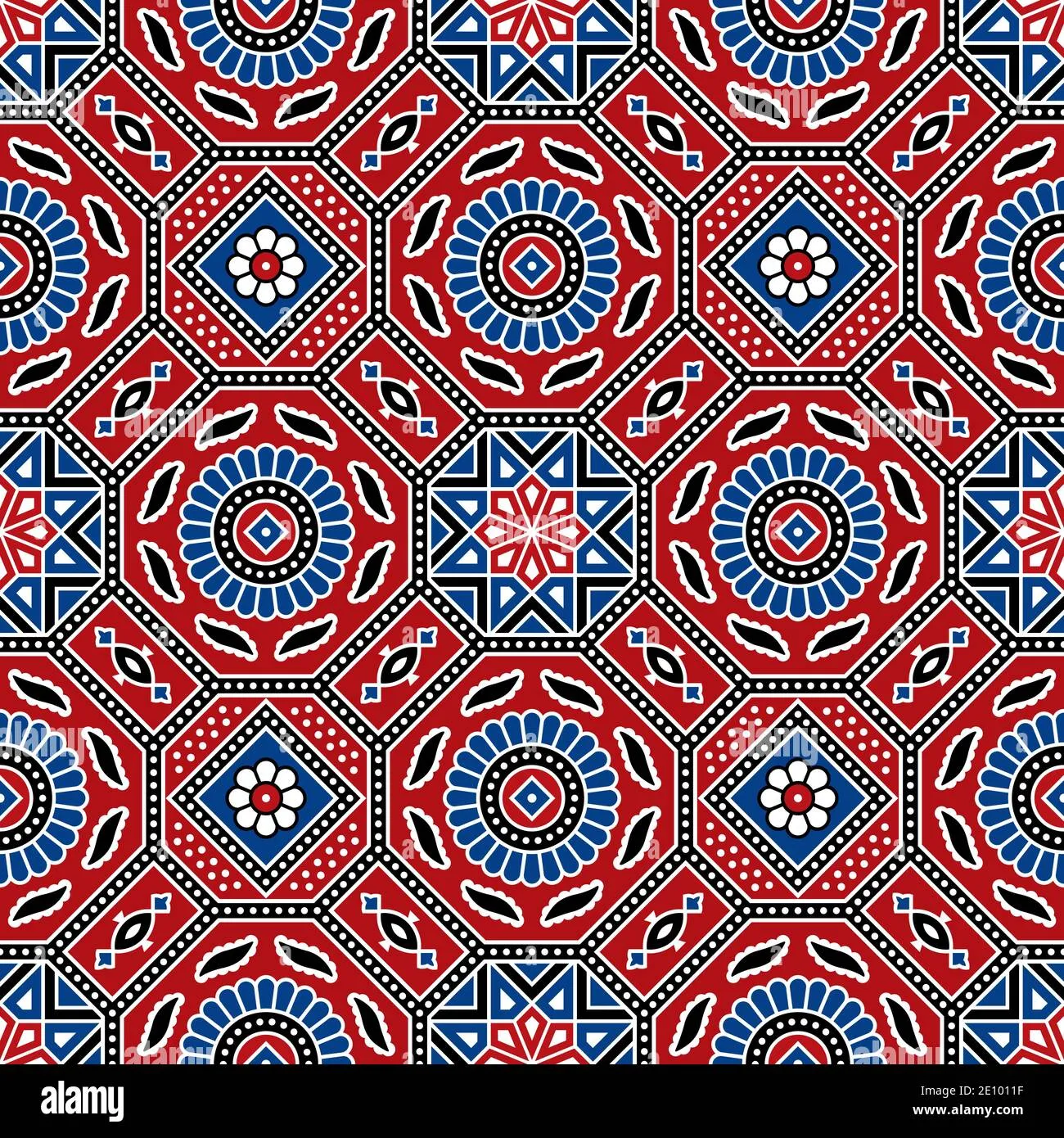
The cloth is rinsed up to fourteen times to lift away the resist and fix the colour for good. Only after the final sun-drying does the full double-sided pattern finally emerge.
No synthetic dye ever touches authentic Ajrakh. The entire palette is grown, dug or fermented.
Ajrakh motifs are never decorative alone — each carries a meaning carried down through generations of carvers.
Eight-pointed stars and lattices standing for celestial order and cosmic harmony.
Intricate circular blooms — a printed memory of Kutch's desert gardens.
Rippling lines that echo water and the flow of life across an arid land.
A sacred motif of endless growth, rootedness and continuity.
Fine, dense edges that hold and balance the central field of the cloth.
The craft is best understood with your hands and nose, not just your eyes. These are the places to go.
The beating heart of the craft, where dozens of family workshops welcome visitors to watch printing and dyeing.
The most renowned Ajrakh master in Kutch, offering demonstrations of the full resist-dye process.
Finished stoles, yardage and saris are everywhere — but buy from the artisans themselves for authenticity.
The annual White Rann festival brings Ajrakh exhibitions and live printing demonstrations together.
| Piece | Typical Range |
|---|---|
| Stoles & dupattas | ₹800 – ₹3,000 |
| Saris | ₹3,000 – ₹15,000 |
| Fabric (per metre) | ₹800 – ₹5,000 |
| Premium natural-dye work | ₹10,000 – ₹25,000+ |
Prices vary with fabric quality, the intricacy of the blocks and whether true natural dyes were used.
Stand in a printing courtyard in Ajrakhpur, watch indigo bloom in the vat, and carry home a piece made in front of you.