Chandrakala
Moon-shaped patterns standing for beauty and love.
A five-thousand-year-old tie-dye tradition — tens of thousands of tiny knots, tied by hand, blooming into dots, waves and gardens of colour.
Bandhani takes its name from the Sanskrit bandhan — “to tie” — and it is exactly that: a pattern built knot by knot before a single drop of dye is poured.
Artisans pluck up minute points of cloth with a sharpened fingernail and bind each with thread; the bound points resist the dye and survive as bright dots when the knots are finally opened. The Khatri community has guarded this craft in Kutch for generations, and a fine sari can carry more than fifty thousand individual knots — each one a small act of patience.
Evidence of tie-dye appears in Indus Valley artefacts — making Bandhani one of the oldest decorative textile arts still worn today.
Bandhani is slow by nature — every colour means another round of tying, dyeing and drying.
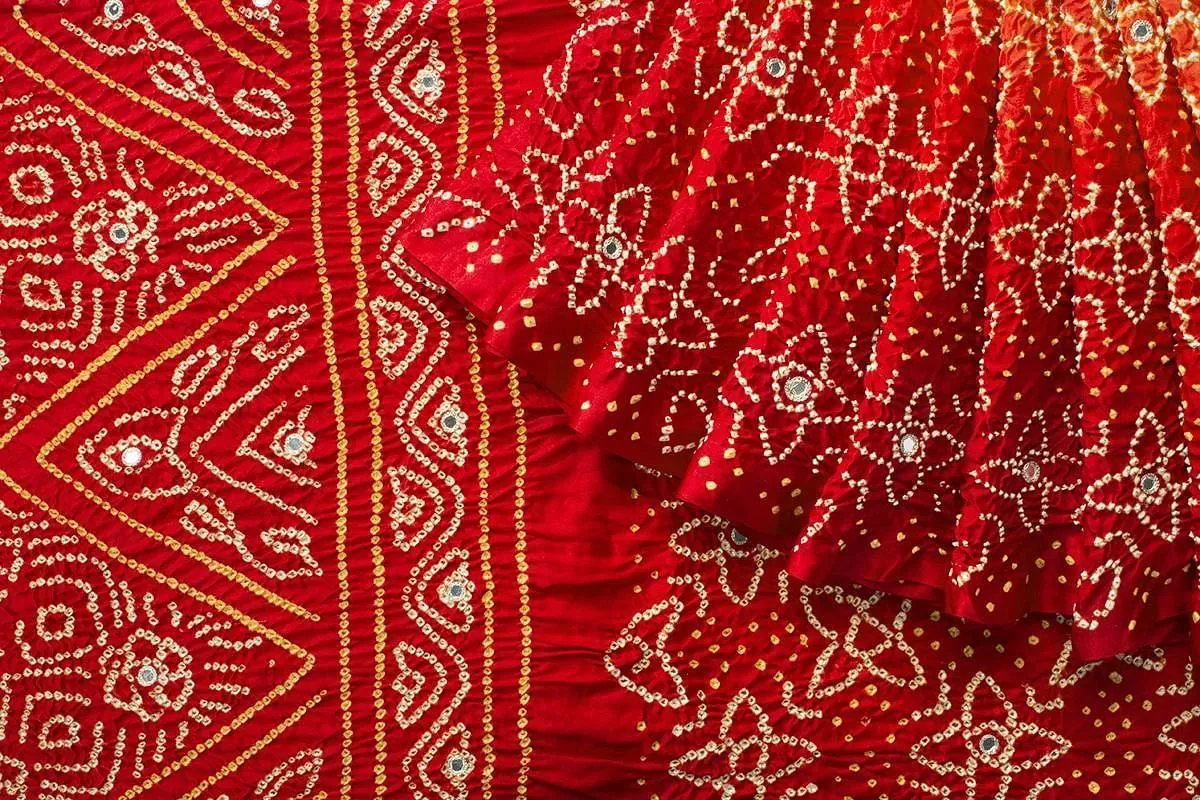
Using fingernails often capped with metal, the artisan pulls up tiny portions of fabric and binds them with thread. Each knot will become one dot in the finished pattern.
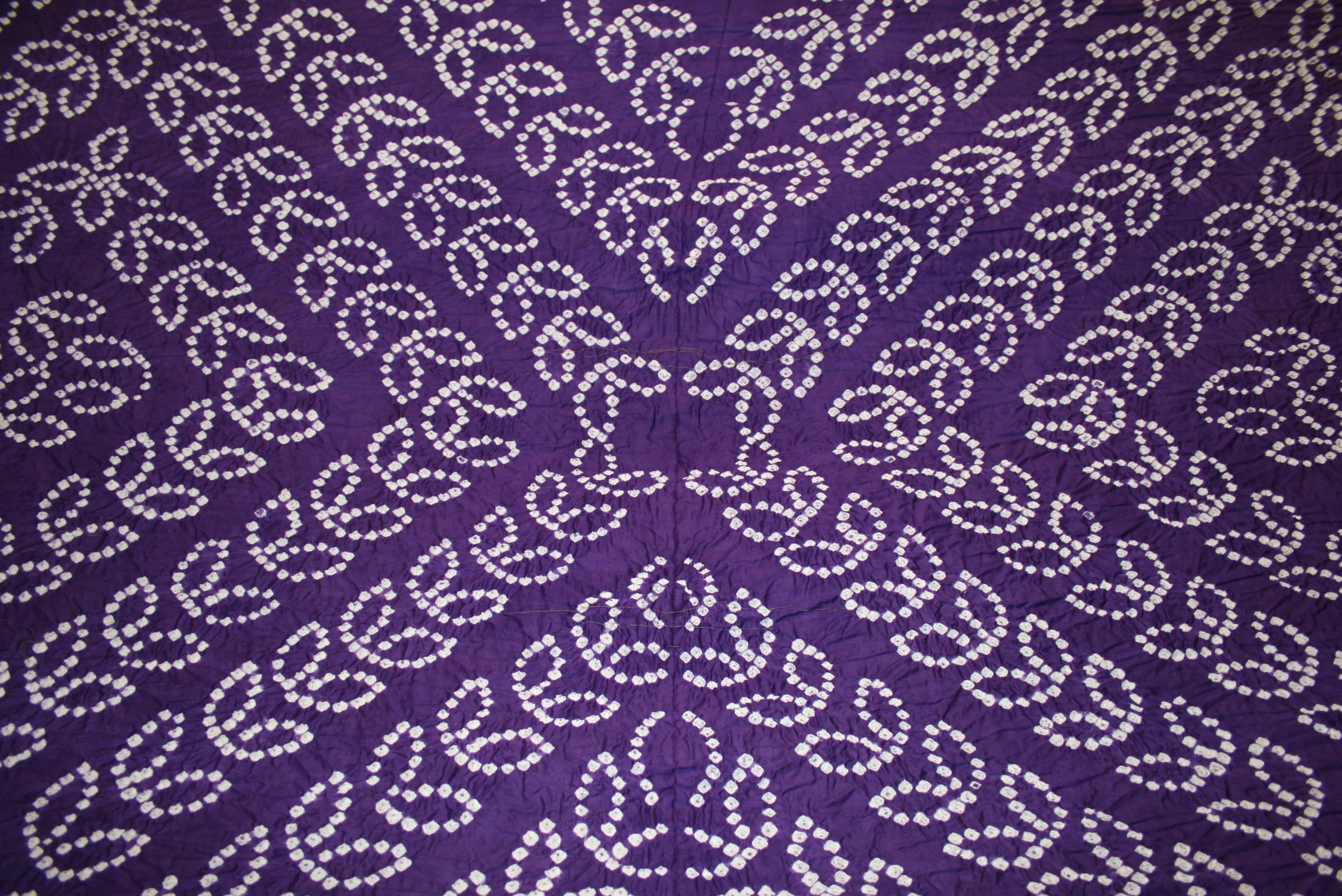
The tied cloth is dipped in the lightest colour first. Wherever it was knotted, the dye cannot reach — those points stay pale and define the design.
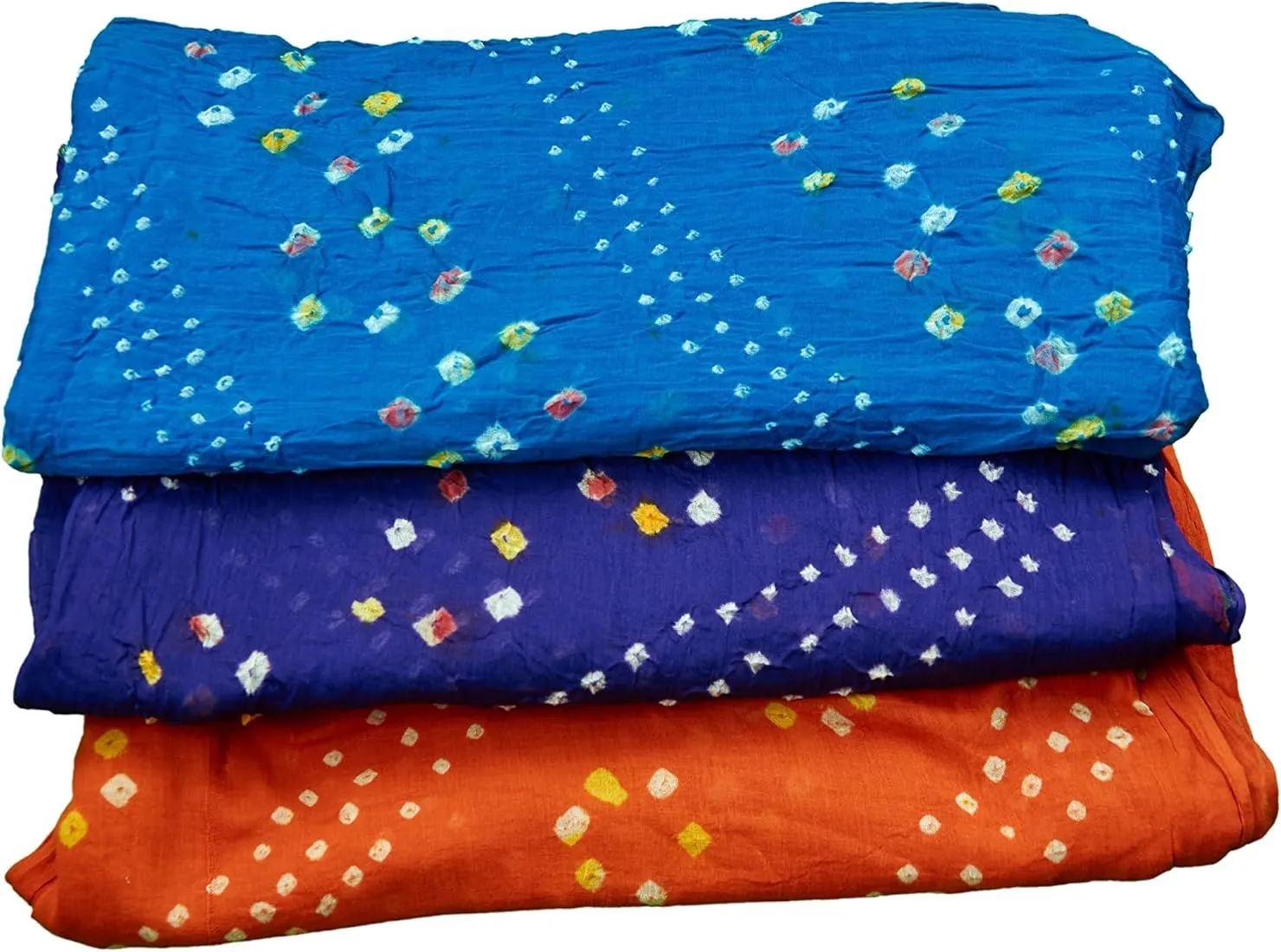
For every additional colour the cloth is re-tied and re-dyed. Richly multi-coloured pieces can pass through five or six full cycles.
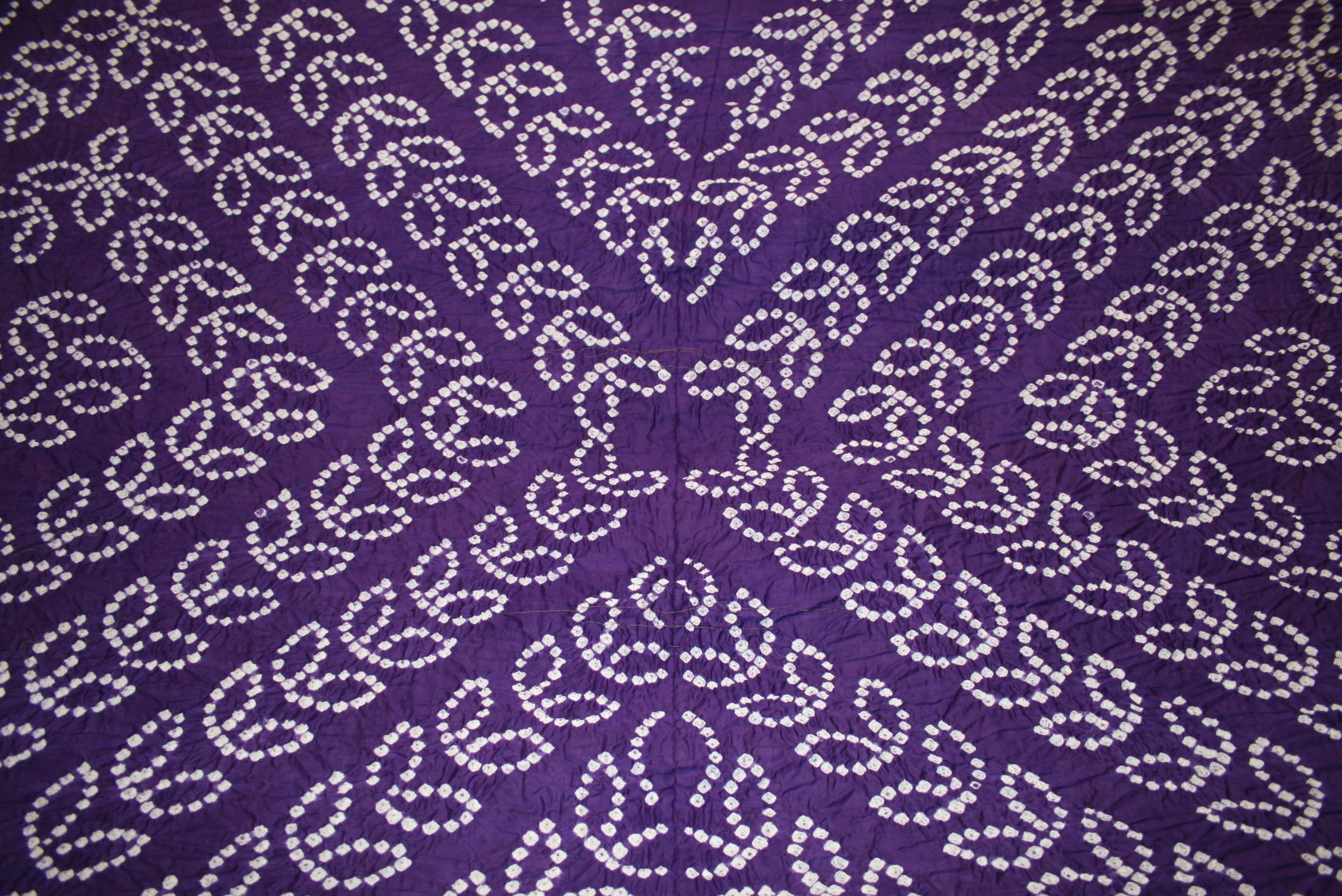
Only at the very end are the knots pulled open, releasing the pattern of light dots against deep colour — the unmistakable signature of true Bandhani.
In Kutch, a Bandhani's colour is never only decorative — it marks occasions, seasons and stages of life.
Thousands of dots resolve into named, time-honoured compositions.
Moon-shaped patterns standing for beauty and love.
An elaborate composition of fifty-two gardens of design.
Hunting scenes alive with elephants and horses.
Fine net-like patterns spread across the whole cloth.
Dots marshalled into ordered squares and grids.
From bustling bazaars to family workshops still tying knots by hand.
The centre of Bandhani trade, with showroom after showroom of dupattas and saris.
Traditional dyeing families still practise here within sight of the sea.
Famous for its own particular Bandhani patterns and motifs.
The White Rann festival brings exhibitions and live tie-dye demonstrations.
| Piece | Typical Range |
|---|---|
| Dupattas | ₹500 – ₹5,000 |
| Cotton saris | ₹1,500 – ₹8,000 |
| Silk saris | ₹5,000 – ₹25,000 |
| Premium pieces | ₹15,000 – ₹50,000+ |
Prices vary with the fabric, the knot count and the number of colours.
Watch a dyer pluck and bind a thousand points of cloth, then lift the knots to reveal a galaxy of dots — and take a piece home from the maker.