Chappu
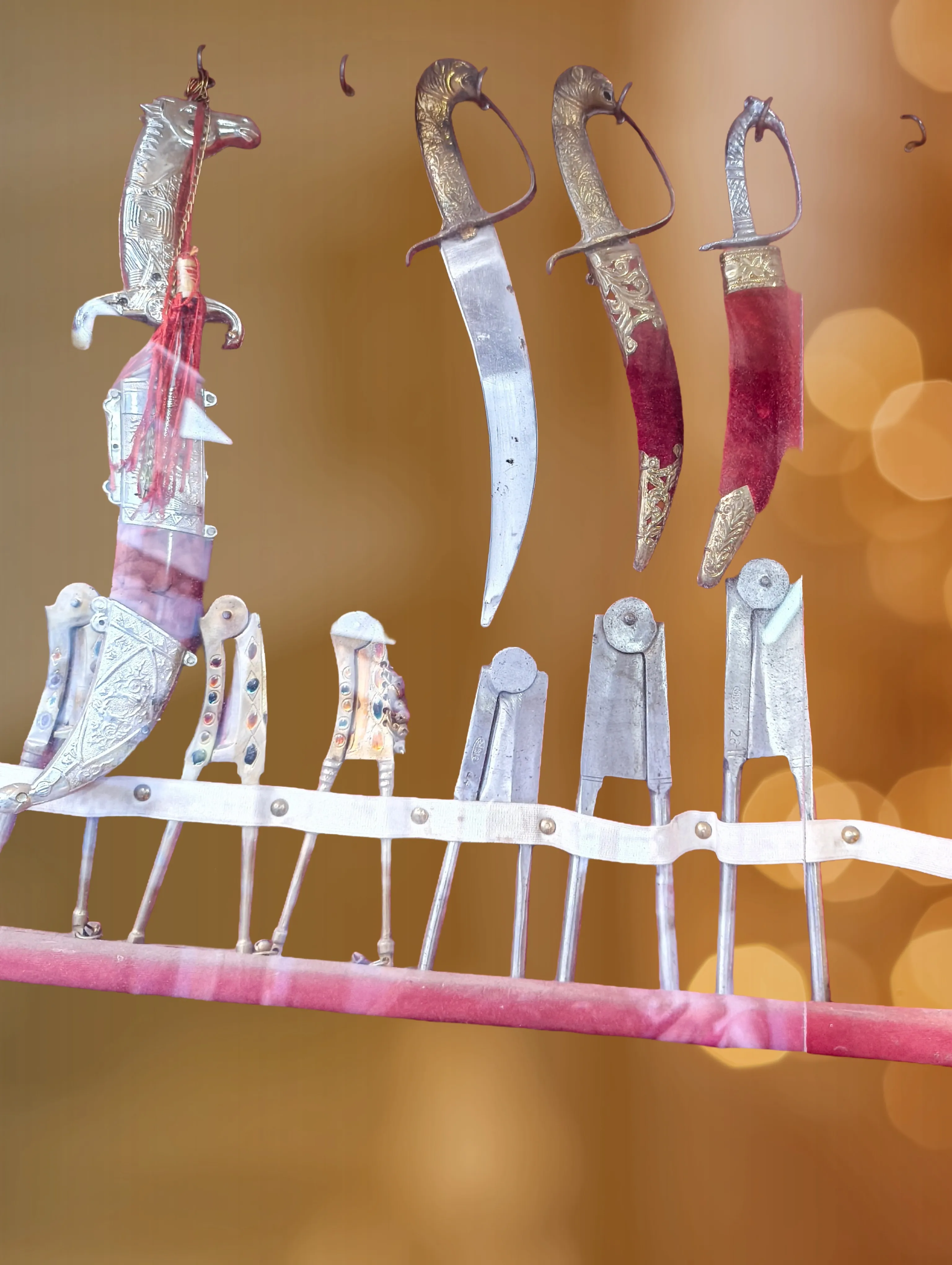
The versatile curved-blade knife — the most common of all.
The forged-blade craft of Anjar — coal-fired furnaces, a hundred hammer strikes, and handles of horn and rosewood that make a working knife into art.
Sudi Chappu is the knife-making craft of Anjar, a Kutch town with a four-hundred-year legacy of forging exceptional blades.
These are no ordinary knives. Anjar blades are reckoned the sharpest traditional knives in Gujarat — prized by chefs, farmers and collectors alike. Worked over coal-fired furnaces and shaped entirely by hand, each one is a piece of functional art, its handle carved from buffalo horn, rosewood or sandalwood and finished with brass inlay as beautiful as the blade is keen.
A single blade can take more than a hundred hammer strikes on the anvil before it holds its final curve.
Heat, hammer, temper and handle — the four movements of the forge.
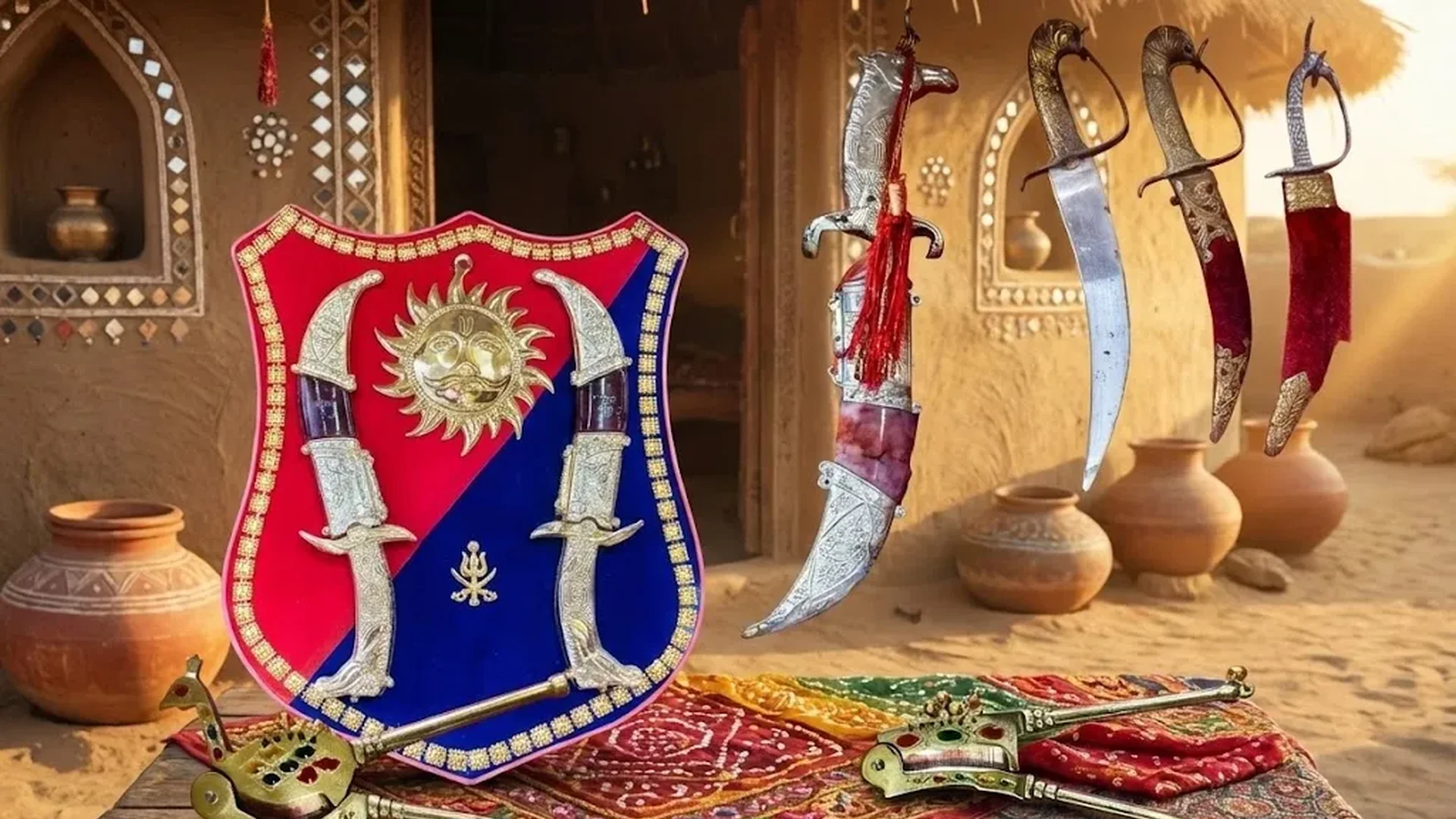
Iron or steel is brought to a red-hot glow in a traditional coal furnace, the airflow controlled by hand bellows for an even, workable heat.
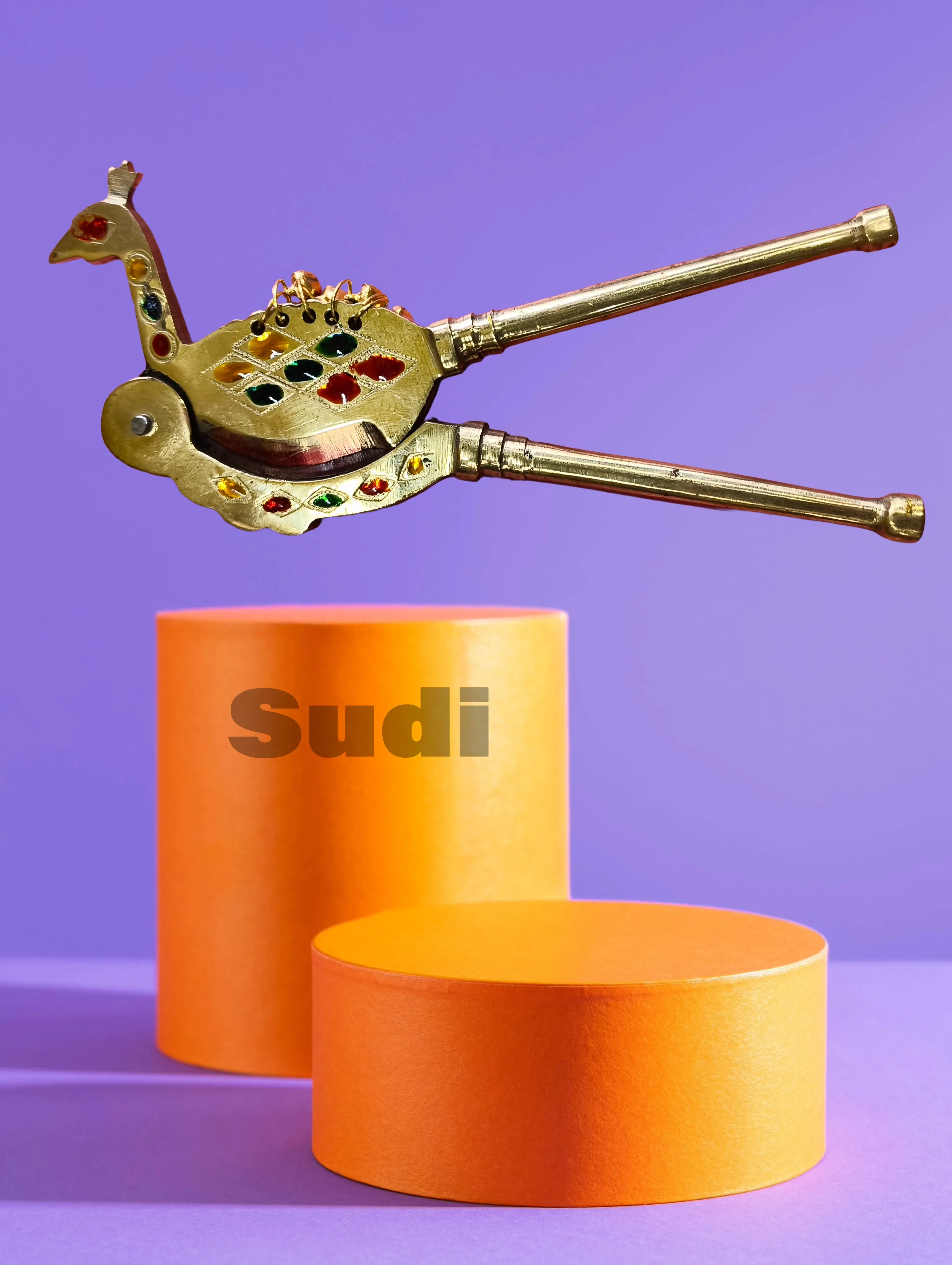
On the anvil the metal is struck again and again — over a hundred blows — drawing out the curve and the exact thickness of the edge.
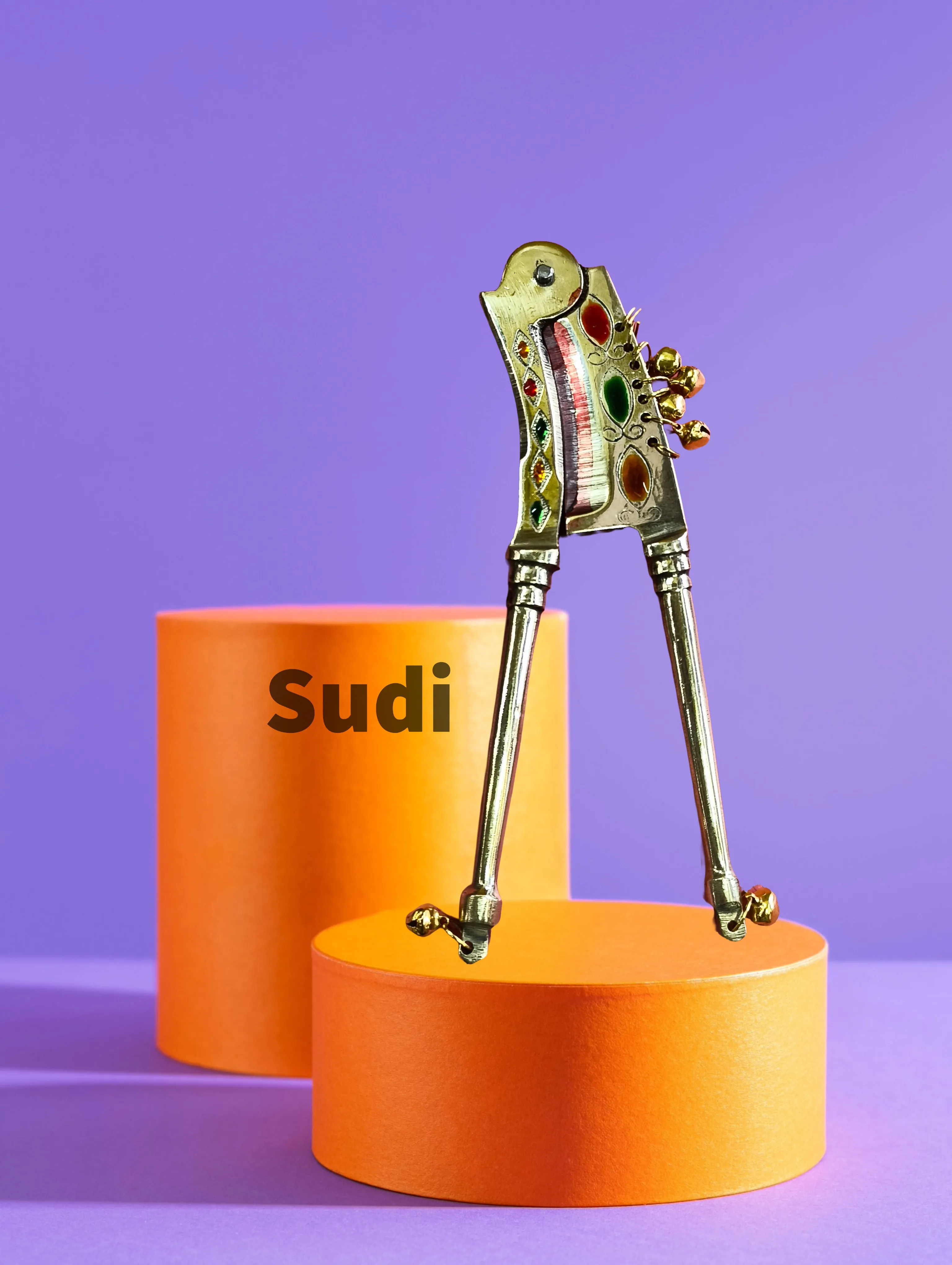
Heated and quenched in turn, the blade is brought to the ideal balance of hardness and spring — the secret of Anjar's legendary durability.
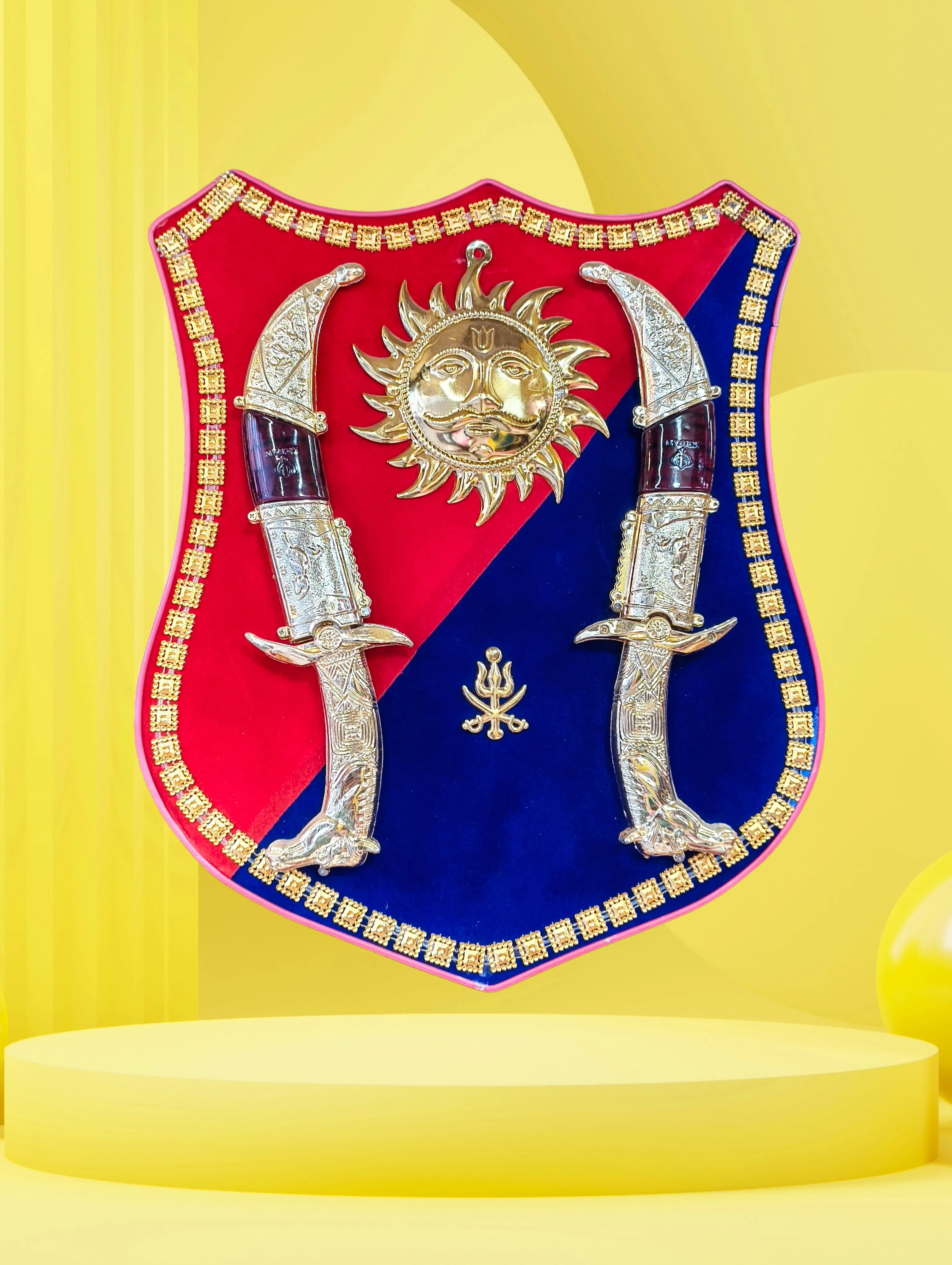
Handles are carved from buffalo horn, rosewood or sandalwood, fitted with brass rivets and often finished with fine inlay work.
One forge, many forms — from the working kitchen to the collector's shelf.
The versatile curved-blade knife — the most common of all.
A straight blade made for precise, clean cutting.
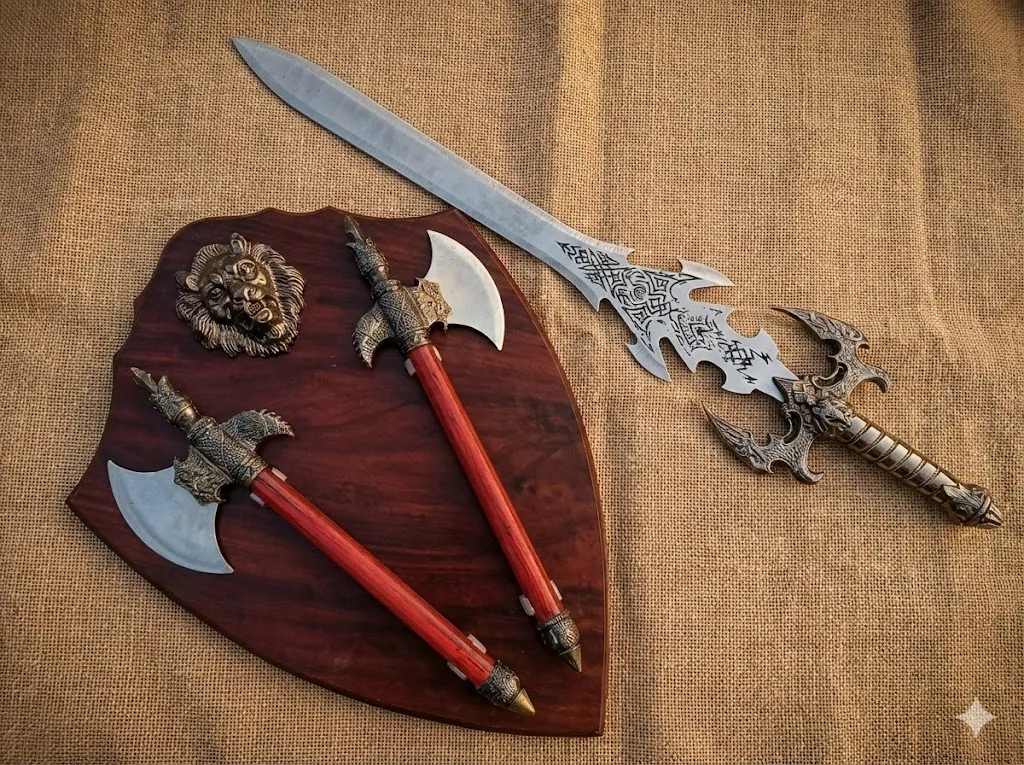
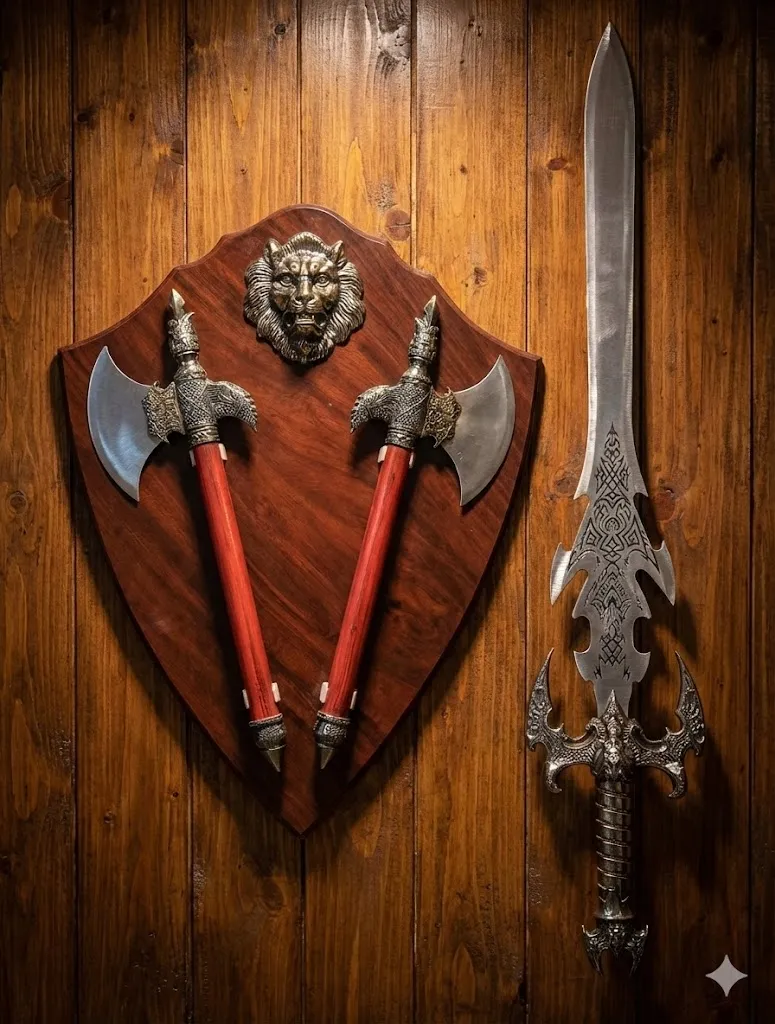
Ornate decorative daggers with elaborate handles.
Heavy-duty blades built for agricultural work.
Traditional cooking knives, balanced for daily use.
In Anjar the smiths still work an entire street of furnaces.
The knife-making lane, lined with working forges and finished blades.
Buying at the forge means the best price and guaranteed authenticity.
A Bhuj contact for Anjar blades — call +91 98257 28452.
Smiths will forge to your specification, given a little time.
| Piece | Typical Range |
|---|---|
| Basic utility knives | ₹300 – ₹800 |
| Buffalo-horn handle | ₹1,000 – ₹2,500 |
| Decorative khanjar | ₹2,000 – ₹5,000 |
| Collector pieces | ₹5,000+ |
Prices depend on the steel, the handle material and the detail of the work.
Walk Lohar Gali in Anjar, watch a blade take shape under the hammer, and carry home a knife made to last generations.